Extra, Extra! How to Transform a Newsprint Mill Into a Circular Economy Leader
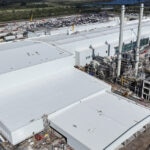
Shotton Mill is completing one of Britain's most significant sustainable industrial transformations. In partnership with Turkish conglomerate Eren Holding, the former newsprint mill in North Wales will reopen in 2026 as the country's largest recycled containerboard and tissue production facility.

When Thomas Newcomen's first steam engine began operating outside Birmingham in 1712, the world bore little resemblance to today. The Industrial Revolution and mechanisation of work remained a dream for some. Electricity, motorized transport, global trade and digital technologies had yet to be imagined. Three centuries after the Conygree mines began using Newcomen's invention to pump water, Britain's industrial heart beats strongly still: though no longer with coal or steam, but through innovation and sustainability.
A few miles northwest in the North Wales county of Flintshire, they understand well the challenges and opportunities of industrial transformation. In Deeside, where the steel industry once flourished before the 1980s economic crisis, a factory rises on the very spot where paper was manufactured for ‘The Times’ and ‘The Sun’ headlines. This facility promises to reshape Britain's recycling and cardboard production through the circular economy.
The sustainable rebirth of Shotton Mill
Print media has seen better days. At the century's start, ‘The Sun’ sold over 3.5m newspapers daily in Britain; ‘The Times’ approached 750,000 copies. Today their circulations barely reach a third of those levels. Yet in the 1980s and 1990s, the press was robust enough to sustain numerous secondary industries throughout its supply chain. Shotton Mill learned to thrive in this ecosystem.
Opened in 1983, the mill became one of Britain's largest newsprint producers. It specialised in processing waste paper collected nationwide, recycling it into material for dozens of national and regional newspapers. The sustained decline in newspaper sales as readers forsook paper for online formats soon threatened the mill's economic viability and the hundreds of jobs it supported.
Yet the future held new opportunities. In 2021, Istanbul-based conglomerate Eren Holding purchased the mill with a singular goal: converting it into Britain's largest production facility for recycled cardboard and tissue paper. The plant, backed by the UK and Welsh governments, will process approximately a quarter of the collected recovered fibre Britain currently exports abroad and then re-imports once processed.
"Environmental sustainability is central to a project that seeks to significantly reduce waste and improve resource conservation," explains Dr. Ulvi Ilhan, Shotton Mill's Finance Director. Once operational, the mill will use 830,000 tonnes of waste paper annually to manufacture packaging board, reducing waste exports and import dependence. Virgin cellulose fibre for tissue production will come from suppliers with FSC [Forest Stewardship Council] or PEFC [Programme for the Endorsement of Forest Certification] sustainability certification.The new Shotton Mill will operate its own combined heat and power plant, enabled to use hydrogen instead of natural gas when commercially available. It will generate biogas from waste and has access to renewable electricity from the nearby Shotwick Solar Park. A new wastewater treatment plant will reduce environmental waste to virtually zero.
Social sustainability matters equally: the facility will maintain over 400 high-quality jobs, including former newsprint employees. It will actively participate in local education and training, creating opportunities for future workers.
"Sustainability is fundamental to Eren Holding's corporate culture and ethical responsibility," notes Dr. Ilhan. "Our business model minimizes environmental impact, promotes social development and adheres to ethical practices, aligned with the Sustainable Development Goals. This includes protecting natural resources, investing in people and adopting sustainable technologies. The group has long supported social development in Turkey through education, female employment, public health and cultural activities—a commitment we will maintain in Britain."
The financial pillars of sustainable industrial transition
Work on Shotton Mill's refurbishment is making good progress, with the opening expected in early 2026. The facility will occupy over 85 hectares, producing more than 750,000 tonnes of recycled cardboard and 67,000 tonnes of tissue paper annually with the total investment exceeding £1BN.
Seventeen European institutions participated in the financing process. The BBVA Group’s Turkish franchise played a key role as green loan coordinator and security agent. The project recently won a Sustainability Global Award 2025, recognizing sustainable businesses. The Welsh Government contributed €15m in form of incentive, while UK Export Finance provided nearly £200m as loan.
All efforts aim to keep Britain's industrial heart alive, strengthening North Wales's employment and social fabric while driving the transition towards environmentally sustainable industry that generates less waste, consumes cleaner energy and contributes to a greener, more circular British economy. "Our short-term goals are clear," adds Dr. Ilhan. "Create over 400 skilled jobs, operate Britain's largest recycled paper plant, significantly reduce carbon dioxide emissions throughout the process and strengthen local supply chain resilience."
Medium and long-term challenges prove more ambitious. "We see ourselves operating as a leading European paper production centre in the circular economy, a plant where renewable energy and full wastewater recycling are fully integrated into all operations, and an industry capable of creating hundreds of new jobs through operational expansion, promoting green sector employment and consolidating Shotton's role in sustainable British manufacturing."