Frontiers Award for Discovering the Magic Angle That Unlocks New Material Properties
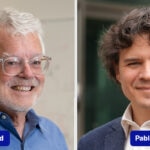
The BBVA Foundation has awarded the Frontiers of Knowledge Award in Basic Sciences to physicists Allan MacDonald (Canada) and Pablo Jarillo-Herrero (Spain) for the discovery of a “magic angle” that makes it possible to induce superconductivity, magnetism, and other properties by rotating novel materials such as graphene. Their findings open the door to high-impact applications, ranging from lossless electricity transmission to the development of electronic devices and quantum computing technologies.

According to the jury, the researchers’ “pioneering work” laid the theoretical foundations for—and provided experimental proof of—a new field now known as twistronics, which makes it possible to modify and control the properties of two-dimensional materials.
In 2011, Allan MacDonald, a researcher at the University of Texas, predicted an unexpected property of graphene, a material consisting of a single layer of carbon atoms. His work showed that when one layer of graphene is rotated on top of another at a very precise angle, electrons—which in conventional materials move at thousands of kilometers per second—slow almost to a stop. This drastic reduction in electron speed made possible profound changes in graphene’s behavior that had previously seemed out of reach. The award-winning researcher coined the term “magic angle” to describe the 1.1° rotation between graphene layers.
An Experimental Breakthrough That Seemed Like Science Fiction
At the time, the discovery attracted little immediate attention, and its true significance only became clear once it was confirmed experimentally in the laboratory. “The community wouldn’t be nearly as interested in my field if there weren’t an experimental program capable of turning that original idea into reality,” says Allan MacDonald, who describes the achievement of Pablo Jarillo-Herrero, originally from Valencia, as “almost science fiction.”
“It came as a major surprise,” explains Jarillo-Herrero, who has worked at the Massachusetts Institute of Technology for nearly two decades. “The technique itself was conceptually simple, but extremely challenging to pull off in the lab. We took a sheet—something like household plastic wrap—but made of a material that is one hundred thousand times thinner than a human hair. We split it into two pieces and, without introducing any folds, placed one on top of the other so they were perfectly aligned.”
Jarillo-Herrero showed that magic-angle graphene can behave either as an insulator or as a superconductor, and that its properties can be tuned with unprecedented precision. The technique they developed allows layers of two-dimensional materials to be stacked at precisely chosen angles, unlocking a wide range of previously unknown physical properties.
A Reverse Philosopher’s Stone
According to the award recipients, the full impact of this discovery is only beginning to emerge. By rotating layers of two-dimensional materials relative to one another at different angles, “we can produce virtually every behavior of matter that exists,” explains Pablo Jarillo-Herrero. “Not just insulating and superconducting states, but also magnetism and many other complex behaviors.” Until now, observing this full spectrum of properties required working with different elements from across the periodic table. Graphene, by contrast, makes it possible to access them all using a single element: carbon. Graphene thus becomes a kind of “reverse philosopher’s stone,” the researcher explains. Rather than transforming materials into gold, it is graphene itself that can take on the properties of many different materials.
However, turning this body of knowledge into industrial applications will first require better methods for producing graphene layers with precisely defined orientations. At present, the process is highly manual and time-intensive: producing a single device can take weeks or even months. As Pablo Jarillo-Herrero puts it, researchers working on these systems are “like medieval monks copying a manuscript.” “We don’t yet have the equivalent of a printing press that would let us produce thousands or even millions of identical devices in one go,” he adds. “Developing such a capability will require substantial advances in fundamental engineering—an area that is already beginning to attract some interest within the research community.”
“One of the most likely applications,” says Allan MacDonald, “is a new type of device that controls how information is transferred between computers and fiber-optic cables. It’s a highly promising technology, and these materials are among the best candidates for achieving electrical control over optical properties.” A future “printing press” capable of producing graphene sheets rotated at different angles would allow researchers to validate the anticipated potential of these materials for quantum technologies—such as computing and sensing—as well as for certain forms of artificial intelligence, while significantly reducing energy consumption.