What is Microinsurance? Social and Health Protection for Less Than Four Euros a Month
Having insurance to cover unforeseen expenses (such as hospital stays, loss of income, or climate events) can mean the difference between moving forward and falling back into poverty. For those in vulnerable circumstances, these extra costs are a massive blow to their household economy. Microinsurance products are affordable financial tools designed to mitigate these risks, guaranteeing well-being and peace of mind in the face of the unexpected.

In 2024, 25.5% of the Latin American population (162 million people) lived in income poverty, according to the latest annual report from the Economic Commission for Latin America and the Caribbean (ECLAC). In such circumstances, accessing a policy with medical coverage or basic healthcare is out of reach for most.
“Microinsurance is not just a financial guarantee; it’s a social stabilizer. It prevents unforeseen events from reversing the progress made by entrepreneurs and pushing them back into poverty. In collaboration with insurers, we have developed low-cost policies, most priced at under four euros a month. We offer, for instance, microinsurance that includes the diagnosis of critical illnesses (like Alzheimer’s or cancer), life and disability coverage, maternity aid, and family healthcare,” explains Susana González, Head of Sustainability and Inclusion at the BBVA Microfinance Foundation (BBVAMF).
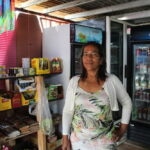
Ana Jaramillo, Panamanian entrepreneur, client of Microserfin - BBVAMF. - FMBBVA
Ana Jaramillo, a Panamanian entrepreneur, admits she was surprised when she was offered health coverage. Most low-income individuals don't even consider insurance an option. “Personally, I think it’s a great initiative and a necessary lifeline in case of illness,” Ana says. According to Panama’s Ministry of Social Development, 50.43% of women lack social protection.
Microserfin, the BBVAMF’s Panamanian institution, has created oncology insurance specifically for low-income female micro-entrepreneurs. Many, like Ana, are heads of households who provide the main income, manage domestic finances, and care for their children. A cancer diagnosis not only brings higher expenses but also a sharp drop in income.
A similar model exists in Colombia through BBVAMF, with policies covering the insured and their families for medical, psychological, and dental care, as well as lab tests. In Peru, through Financiera Confianza, the Foundation bridges the financial protection gap by combining health guidance with traditional coverage (such as medical expenses and a daily allowance for the family in case of accidents). Other policies cover loan repayments during illness or help recover assets after theft, fire, or adverse weather events. In Chile, the Foundation offers the 'Mi familia protegida' (My Protected Family) microinsurance, providing accident and life coverage along with family assistance benefits.
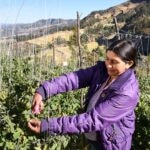
Gender-Focused Microinsurance
Women are more vulnerable to unexpected shocks. According to the ILO, there is an 11.1 percentage point gap in social coverage between men and women. Among BBVAMF entrepreneurs, 59% live alone with dependents. Tailoring products to their specific needs is essential. Their circumstances are unique, as they often face extra barriers to the labor market, which drives them toward entrepreneurship.
Bancamía, the Foundation’s Colombian institution, offers the 'Ser Mamá Protegida' insurance in partnership with BBVA Seguros. It includes special coverage during maternity leave, such as assistance with microcredit payments, telemedicine, savings options, and financial education. In Peru, the Foundation promotes an initiative to teach entrepreneurs how to protect their money and work through microinsurance such as 'Protección Total' or 'Vida Segura,' proving that prevention transforms vulnerability into a solid safety net. In 2025, BBVAMF provided these health and medical assistance insurances to 141,000 people.
Parametric Technology for Climate Adaptation
Natural disasters can aggravate poverty cycles. This is why promoting climate microinsurance among vulnerable populations is crucial. Recently, extreme weather in Colombia has posed a constant risk. The Institute of Hydrology, Meteorology, and Environmental Studies (IDEAM) issued alerts for rainfall 70% above historical averages in the Andean and Caribbean regions, hitting productive areas hard.
Bancamía offers its entrepreneurs parametric microinsurance. The payout process is automatic: the entrepreneur doesn't need to submit paperwork to prove damages. If a pre-agreed severity threshold is crossed (such as accumulated millimeters of rain over three days), the process begins without physical inspections.
“Unlike traditional insurance, this uses satellite technology to measure the magnitude of climate events. It has two components: a traditional one for damages and a parametric one for agricultural activities, covering crop losses caused by rain, drought, or earthquakes. The payment goes directly toward the entrepreneur's loan installment. It costs less than three euros a month. Another added value is education on climate events and free virtual training so entrepreneurs can prepare for environmental disasters,” details Susana González.
Similarly, in Peru, several microinsurance products protect farmers' crops against drought, rain, flooding, or extreme temperatures in an accessible and affordable way.
The importance of microinsurance adapted to low-income populations is increasingly evident. In 2025, 513,885 people took out insurance through BBVAMF institutions. Life insurance is the most in-demand (60.6%), followed by health (27.5%) and climate (19.5%). Assistance is harder to provide in developing countries; that is why we must bring tailored microinsurance to those in vulnerable conditions, allowing them to lead healthier lives without uncertainty.