DBRS Ratings upgrades BBVA's credit rating to AA (low)
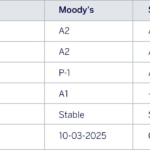
DBRS Ratings has upgraded BBVA's credit rating from A (high) to AA (low), with a stable outlook. The credit rating agency positively assessed “the group's track record of profitability, which has remained at very high levels and demonstrated strong resilience across different interest rate cycles and amid uncertain macroeconomic and geopolitical conditions.”

The changes affect not only BBVA's senior preferred debt rating, but also the bank's long-term issuer rating and long-term deposit rating. All three ratings have been upgraded from A (high) to AA (low). The rating on senior non-preferred debt has been raised from A to A (high), while the subordinated debt rating has been upgraded from A (low) to A. The outlook is stable in all cases.
In its report published on Tuesday, DBRS highlights that the group's results are underpinned by its leading positions in Spain and Mexico, a well-diversified business model and a strong commitment to cost control, which has translated into efficiency levels that compare favorably with those of its European peers.
The rating agency believes BBVA is well positioned to continue delivering very strong profitability metrics over the medium term and to meet its key financial targets for 2025-28. This performance would be supported by sustained loan growth and solid recurring income generation across its main markets.
DBRS also highlights BBVA's strong capital position and liquidity profile. In its view, the group's substantial organic capital generation capacity enables it to maintain comfortable buffers above regulatory requirements, while financing business growth and making significant distributions to shareholders.
“DBRS believes that the combination of strong recurring earnings and robust capital buffers provides the group with significant headroom to withstand highly adverse scenarios, as demonstrated in the latest 2025 stress test, in which the group's capital depletion under the adverse scenario was significantly lower than the EU average,” it concludes.