BBVA Channels €36 Billion into Sustainable Business in the First Quarter of 2026 (up 33 Percent YoY)
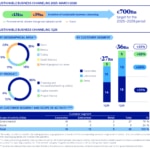
BBVA channeled €36 billion into sustainable business in the first quarter of 2026, an increase of 33 percent over the same period in the previous year. Of this amount, €12.6 billion came from Spain. This activity allows the bank’s clients to gain access to financing and solutions for the energy transition, efficient resource use and social challenges. With this achievement, the bank has reached a total of €170 billion toward its €700 billion target for the 2025 – 2029 period.

Of the total amount channeled into sustainable business between January and March, €27 billion (76 percent) was allocated to the environment (climate change and natural capital) and €9 billion (24 percent) to social issues.
By country, Spain accounted for 35 percent of the quarter’s sustainable business, followed by Türkiye, with 17 percent, Mexico with 16 percent and South America with nine percent. The other geographic areas represented 23 percent.
By product, financing and transactional banking made up 86 percent of the total amount channeled in the quarter, while capital markets accounted for 10 percent and project finance for four percent.
Growth across all business segments
In wholesale banking (CIB), BBVA channeled €18 billion, an increase of 31 percent over the first quarter of 2025. In parallel, BBVA CIB continued reinforcing its business in strategic areas such as financing for cleantech, renewable energy projects and solutions such as sustainability-linked confirming. Financing for renewable energy projects stood out, reaching €1.5 billion in the quarter, with particularly significant contributions from Europe and the U.S.
For its part, Commercial & Institutional Client Solutions channeled €13 billion, an increase of 24 percent year-over-year. This segment maintained positive performance across all countries, with particularly strong momentum in Colombia, where it advanced 61 percent year-over-year. New business generation also reached €1.376 billion year-to-date, with particularly strong contributions from Mexico and Türkiye. Its main growth drivers included sustainability advisory and specialist support for agribusiness, the circular economy and infrastructure.
In retail banking, BBVA channeled €5 billion into sustainable business in the first quarter of 2026, an increase of 68 percent over the same period in the previous year — the highest year-over-year growth among the three segments. Within this area, the SME business stood out, with €2.286 billion channeled, representing a 198 percent year-over-year increase.
In the breakdown by segment and area, business related to the environmental field totaled €16 billion for corporate clients, €10 billion for enterprises and €2 billion for retail customers. In the social area, funding reached a total of €2 billion for wholesale clients, €3 billion for enterprises and €3 billion for retail customers.
Sustainable business origination enables BBVA clients to finance projects related to energy efficiency, electrification, housing renovation or infrastructure, as well as access to solutions that integrate environmental and social criteria. For businesses, it allows them, among other things, to adapt their business models to decarbonization and resource management processes. For individual customers, it promotes decision-making around actions such as purchasing an efficient home or vehicles with lower emissions.
BBVA’s strategic commitment to sustainability
BBVA continues to promote sustainability as a driver of growth, with the aim of fostering new business opportunities through it. The climate, natural capital and opportunities related to social issues are the three pillars on which the bank’s sustainability strategy is based. The goal is for businesses and individuals to be able to identify which alternatives best meet their needs, which financing they can use and how they can gradually progress in their transition.
The bank has set a target of channeling €700 billion in sustainable finance for the 2025 – 2029 period. This more than doubles the previous target of €300 billion between 2018 and 2025, a goal the bank reached in December 2024, one year ahead of schedule. The new, more ambitious target is also for a shorter timeframe (five years versus eight years).
The criteria the bank uses to calculate its products within its sustainable business volume are described in its Sustainable and Transition Business Channeling Guide.
Sustainability Week at BBVA
Starting yesterday, Monday, BBVA is holding Sustainability Week, an initiative that will bring together businesses, government agencies and experts for four days to discuss the major challenges in the sustainable transition. Overall, the various sessions will cover practical ways to move forward in the transition toward a more sustainable economy across different fields. The focus will be on translating these challenges into actionable decisions for companies and institutions, what steps to prioritize, what barriers to foresee and how to leverage financing to move forward. Topics will include the transformation of the energy system and decarbonization processes, building renovations and improvements in residential energy efficiency, as well as the challenges of sustainable mobility in both urban and interurban contexts.
There will also be room to analyze the role of the circular economy in the management of resources such as waste or water, as well as the opportunities presented by the demographic challenge. All this with an approach that is closely tied to the realities of businesses and institutions, emphasizing concrete solutions, collaboration and the role of financing in helping these projects move forward.
Javier Rodríguez Soler, Global Head of Sustainability and Corporate and Investment Banking (CIB) at BBVA, will deliver the closing remarks.