BBVA Covers 99 Percent of its Electricity consumption with renewable energy
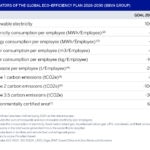
In 2025, 99 percent of BBVA’s global electricity consumption came from renewable sources, and the bank has set a new target to reach 100 percent shortly. Since 2019, the bank has reduced scope 1 and 2 CO₂ emissions¹ by 83 percent and cut per-employee electricity consumption by 22 percent, energy consumption by 19 percent, water consumption by 36 percent, paper consumption by 44 percent and net waste by 33 percent. Furthermore, environmentally certified floor space reached 62 percent, far surpassing the 45 percent target set in the Global Eco-efficiency Plan.
¹Scope 1 and 2: BBVA's direct and indirect emissions, excluding those of our clients.

BBVA has approved a new 2026-2030 Global Eco-efficiency Plan, with measurable targets to reduce the environmental impact of its direct activities. This new roadmap builds on the 2021-2025 Global Eco-efficiency Plan, which achieved all its targets two years ahead of schedule. Since then, BBVA has continued improving its indicators.
The bank has consolidated its energy transition by operating almost entirely with renewable energy and achieving double-digit reductions in its main environmental indicators, allowing it to reduce the environmental impact of its activity.
Building on this foundation, the new 2026-2030 Global Eco-efficiency Plan lays out a more ambitious roadmap, with a focus on optimizing resource use and reducing environmental impact. It aims to source 100 percent of its electricity from renewables; improve water, paper and energy efficiency per employee; further reduce employees’ indirect emissions and expand certified floor space, with the goal of ensuring that two-thirds of its facilities have at least one environmental certification by the end of the decade.
“The new plan is a key lever to reduce the environmental impact of our direct activities. This approach reinforces our commitment to more efficient building management by relying on technology and increasingly stringent standards. We are building on a very strong foundation, with significant progress in all indicators. Now, we are taking it a step further and raising our sights to continue reducing consumption and emissions across our entire real estate network,” explained Alberto Agustín, Head of Premises and Services at BBVA. “Beyond the targets, this plan consolidates a culture of environmental efficiency and responsibility throughout the entire organization, where every building and every team contributes to a common aim,” he added.
The document was created with contributions from local teams in all the geographies where BBVA operates, and it has been aligned and validated globally, with the aim of combining Group-wide consistency with adaptation to the realities of each market.
The 2026-2030 Global Eco-efficiency Plan includes five main pillars. In renewable energy, BBVA will make progress through new power purchase agreements, renewable energy certificates and on-site generation. In energy efficiency, the bank will promote the modernization of lighting, climate control and building management systems. In sustainable mobility, it plans to continue the gradual renewal of its fleet to electric or low-emission vehicles. In resource and waste management, it will reinforce measures to save water, reduce paper consumption and increase recycling and recovery. And in the decarbonization of operations, the bank will take steps to reduce both direct and indirect emissions related to Group activities.
BBVA is already applying these levers in the various countries where it operates. In electricity, it combines renewable power purchase agreements in Spain, Mexico, Türkiye and Argentina with the use of guarantees of origin in several markets and on-site solar generation in countries like Spain, Mexico, Türkiye, Argentina, Peru and Uruguay.
In addition, BBVA has internal mechanisms to incentivize the reduction of emissions under direct management. In 2025, the bank retired 167,532 carbon credits and maintained an internal carbon price of €32 per ton, which is charged locally across Group geographies based on their carbon footprint. This internal procedure was launched by BBVA in 2020 to ensure that each area plans for the CO2 costs of each of its actions, thus encouraging emission reduction. Every area, and every individual employee, becomes more aware because the cost of the CO2 emitted by their department (in travel, for example) is internally allocated to their budget.
Indirect emissions
Apart from the measures directly linked to the plan’s objectives (direct emissions from its activity), BBVA also manages its indirect emissions (scope 3), which make up the bulk of its carbon footprint. Specifically, the financed portfolio (category 15 of the financed scope 3 emissions) represents around 99 percent of the bank’s emissions. To advance its decarbonization, BBVA has developed a sector strategy with transition plans and monitoring metrics, and it has set intermediate emission reduction targets for 2030 to gradually align its portfolio with decarbonization pathways. Furthermore, it promotes initiatives related to other indirect emissions, such as fomenting more sustainable mobility among its employees by offering electric vehicle charging stations, corporate shuttles and car sharing solutions in the different geographies.