"Energy and competitiveness in Europe"
If every crisis also creates an opportunity, then since Russia’s invasion of Ukraine—and even more so since the conflict involving the United States, Israel, and Iran—Europe has entered a period full of possibilities, with strong incentives to continue reducing its dependence on imported energy and strengthening its competitiveness. But opportunities do not automatically mean results. They take time to materialize, require perseverance, and often come at a significant cost.

Progress has been gradual. According to data from the Energy Institute, Europe still met roughly 75% of its oil demand through net imports in 2025 and produced only 10% of the natural gas it consumed, showing little change from previous years. So far, the energy crisis triggered by the war in Ukraine has shifted the source of gas imports from Russia to Qatar and the United States, but it has not materially altered the slow decline in Europe’s fossil fuel energy intensity per unit of GDP, which remains about half that of the United States and one-third that of China, reflecting a structural scarcity of domestic energy resources. Geopolitical crises that affect fossil fuel markets accelerate the shift toward low-carbon energy sources only when viable and cost-competitive technological alternatives are already available. Fossil fuels continue to dominate while decarbonization moves ahead gradually, constrained by the long investment cycles and inertia of existing infrastructure. What ultimately drives change is not so much temporary spikes in energy prices as the perception of persistent supply risk, which reshapes expectations, redirects innovation, and encourages governments to strengthen energy security, resilience, and strategic autonomy. Against the current backdrop of structurally higher geopolitical risk, renewable energy deployment has the potential to accelerate more rapidly than in previous crises because costs are significantly lower and technologies are far more mature than they were decades ago, when the oil shocks of the 1970s helped drive the transition toward nuclear power.
Renewable energy alone, however, is not enough to improve competitiveness. Greater deployment of renewables helps to lower wholesale electricity prices by supplying an ever-larger share of electricity traded in the wholesale market at lower marginal cost. According to BBVA Research, between 2021 and 2024, the 20-percentage-point increase in the share of renewables in Spain’s electricity mix succeeded in bringing down wholesale electricity prices by nearly 20%, with even greater reductions possible in the second half of the decade if the targets set out in Spain’s National Energy and Climate Plan (NECP) are achieved. There is also a clear negative correlation across Europe’s major electricity markets between the share of renewables in the electricity mix and the sensitivity of electricity prices to natural gas prices.
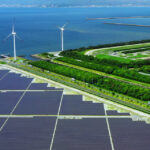
Even so, lower wholesale electricity prices alone will not deliver an energy-driven transformation in competitiveness unless those savings reach the retail market and are reflected in household and business electricity bills. The main obstacles remain bottlenecks in electricity networks and insufficient energy storage capacity. As BBVA Research notes, while global investment in renewable energy has nearly doubled over the past decade, investment in electricity grids has increased by only about 20%. The result has been greater network congestion, renewable energy curtailment, higher system costs, and delays in electrification.
The challenge is now more institutional and regulatory than it is technological. Fragmented planning, lengthy permitting processes, and regulatory frameworks designed primarily to minimize the risk of stranded assets have slowed the more forward-looking expansion of grid infrastructure. Digitalization, artificial intelligence, and energy storage can improve efficiency and ease system constraints, but they cannot replace the need to expand physical transmission and distribution networks. Across Europe, the challenge lies in scaling up investment and improving coordination at the supranational level. In Spain, meanwhile, congestion at many distribution nodes—along with the potential hoarding of grid connection capacity—reflects insufficient investment resulting from planning frameworks that prioritize cost containment over meeting growing demand. Without fundamental changes to the way electricity networks are planned and remunerated, meaningful progress in addressing these bottlenecks is unlikely.
In short, energy crises expose vulnerabilities and therefore reveal opportunities. Yet seizing those opportunities requires policy changes that complement the incentives created by the market. The goal is to ensure that the next energy crisis—which will inevitably arrive—is a little more of an opportunity and a little less of a problem.