These Are the Key Markets Powering the Global Green Economy
The green economy was worth more than five trillion dollars in 2024, according to the report Already a Multi-Trillion-Dollar Market: CEO Guide to Growth in the Green Economy by the Alliance of CEO Climate Leaders. It is the second fastest-growing sector, with only technology ahead, and this despite the complex geopolitical environment. Globally, China leads this green market.

Clean technologies (or ‘cleantech’ for short), renewable energy, and the circular economy all fall under the broader heading of the green economy, a term that encompasses and champions solutions that help reduce the environmental impact of human activity on the planet while protecting natural capital. According to the UN Environment Programme, the green economy can be effective in mitigating environmental problems while also contributing to human well-being and social equity.
The green economy also happens to be one of the sectors presenting the greatest growth opportunities worldwide, according to the report titled Already a Multi-Trillion-Dollar Market: CEO Guide to Growth in the Green Economy, produced by the Alliance of CEO Climate Leaders, of which BBVA is a member. According to the report, this economic ecosystem was worth more than 5 trillion dollars in 2024 and could surpass $7 trillion by 2030.

Behind these figures are companies for which green products and services have become a key growth driver. These businesses are also seeing the positive results of embracing this type of economy: the report shows that green revenues grow twice as fast as conventional revenues on average, and that companies gain access to cheaper capital and achieve higher valuations.
This sharp growth is taking place against a backdrop of geopolitical uncertainty, which is not helping negotiations and policy decisions aimed at championing a more sustainable system. For instance, the climate summit recently held in Brazil (COP30) culminated with a minimal-consensus agreement that made no mention of the need to phase out fossil fuels to curb global warming.
Even so, the economic commitment was maintained to channel $1.3 trillion annually into climate action and a further $300 billion into climate change adaptation in developing countries. According to the Alliance of CEO Climate Leaders report, this makes sense both environmentally and economically: solutions to decarbonize more than 50% of total emissions are already cost-competitive.
“Recent geopolitical developments, energy security considerations and short-term economic pressures have shifted the conversation on climate action. But actual investments in the green economy continue to increase,” the report notes.
Sectors driving the green economy
Growth in the green economy is being driven by a combination of rising demand, falling costs and technological maturity. This is generating opportunities in markets with very different levels of deployment and development.
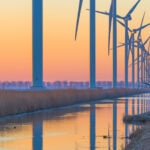
- First, markets linked to mature technologies (solar photovoltaic power, wind power and electric vehicles) are leading the charge. According to the report, these technologies have grown faster than the experts expected. To give an example, 600 gigawatts of new photovoltaic capacity were installed in 2024, according to the International Energy Agency — a record figure that confirms the strong forward momentum in the global renewables market. These mitigation solutions, designed to reduce or avoid greenhouse gas (GHG) emissions that accelerate climate change, account for roughly 80% of total market demand, according to the World Economic Forum (WEF) report.
- Second, we have the market associated with climate change adaptation and resilience. This includes the development and commercialization of resilient construction materials, flood- and disaster-resilient infrastructure, efficient waste management, climate forecasting and risk assessment technologies, among other segments. The report states that this market already stands at €1.1 trillion and is growing rapidly, especially as the impacts of climate change intensify. “Adaptation and resilience solutions now account for more than one-fifth of all climate-related investments,” the report notes. “The resulting market extends beyond the Global South, long the front line of climate impacts, into the Global North, where risks are mounting as rapidly.”
Less mature or more costly options, such as low-carbon hydrogen, carbon capture, utilization and storage (CCUS), and advanced biofuels, still require government incentives and a friendly regulatory framework to help them keep up with more mature and cost-effective options.
On a global scale, China is spearheading the green market in terms of spending and also in deployment and innovation. According to the Alliance of CEO Climate Leaders, in 2024 its investment in clean energy reached $659 billion, far outpacing Europe and the United States.
Recommendations for scaling in green markets
The report Already a Multi-Trillion-Dollar Market: CEO Guide to Growth in the Green Economy offers a series of recommendations that companies can follow to compete and scale in the green economy:
- Build on solid foundations, with a purpose and strategy that are aligned.
- Strengthen the factors that drive growth in order to overcome sector barriers. The report highlights the value of combining technological maturity with profitability, leveraging alliances and regulation, unlocking smart capital and diversifying financing sources.
- Target organic growth and strategic collaborations.
- Learn from those that have succeeded—replicate what works and avoid what does not.
“Winning in the green economy is not always easy. At its core, growing in this market requires the same business fundamentals as any successful venture: a clear purpose and strategy, a compelling value proposition and an agile operating model built for rapid scale,” the Alliance of CEO Climate Leaders notes.
“But often, it needs more. Winning companies accelerate growth by rigorously pushing for technology maturity and bringing down costs of nascent technologies. They are often able to shape favourable regulation and mobilize early adopters. And they are able to unlock smart capital in support of a viable business case for their green offering,” the report concludes.