During the recent London Climate Action Week, several BBVA leaders cautioned how physical climate risk is no longer solely a sustainability issue but has become a key consideration in business and investment decisions. According to Antoni Ballabriga, Global Head of Sustainability Intelligence at BBVA, “the ability to adapt to climate change has become a competitive advantage for companies.”

Speaking at one of the panel discussions organized by the United Nations Environment Programme Finance Initiative (UNEP FI), Antoni Ballabriga described the upcoming climate summit in Antalya as “the implementation COP.” The BBVA Global Head of Sustainability Intelligence said that “the question is no longer just whether climate impacts will materialize, but how companies and lenders incorporate them into their investment decisions.”
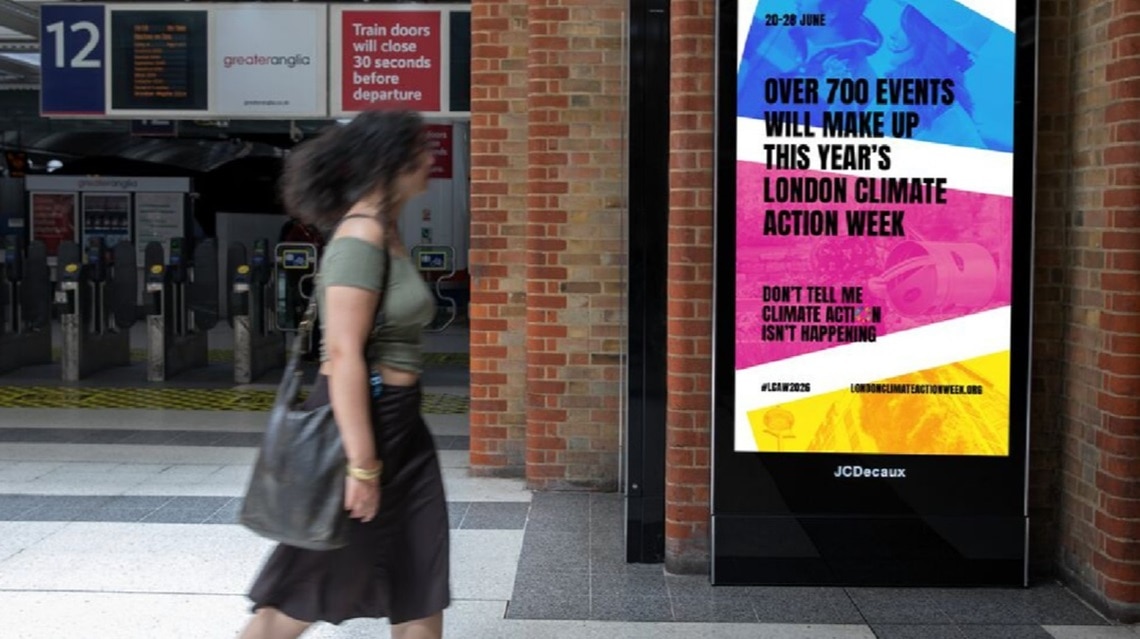
Speaking at another session during the climate week, held in London from June 22 to 25 and with over 100000 attendes and well over a 1000 events, José Antonio Carbonero, Managing Director of Project Finance UK, said that “physical climate risk has evolved from being solely a sustainability issue to becoming a central capital allocation consideration.” He noted that “financial institutions and investors alike are enhancing their capabilities to assess physical risks and are actively seeking credible resilience strategies from their clients.” In his view, although adaptation is not yet systematically factored into financing decisions, the focus is shifting toward greater scrutiny of climate exposure and preparedness plans. “Companies that understand their vulnerabilities and can demonstrate clear climate adaptation measures,” Carbonero argued, “will be better positioned to maintain access to capital over the long term.”
In this context, financial institutions are also strengthening their advisory role by helping clients understand their physical risks and develop resilience plans that can turn projects into financeable opportunities.
To show how integrating “climate resilience as a standard” helps protect future revenues and competitiveness, Carbonero shared practical examples of project finance transactions supported by the bank, including the HARP aqueduct, a water infrastructure project designed to transport water across northwest England, transportation infrastructure projects in several countries, and several regenerative agriculture initiatives.

Antoni Ballabriga during his speech at the UNEP FI Global Roundtable at London Climate Week
Resilience as a business standard
The strategic business case is also evolving. The focus is no longer solely on the cost of inaction and avoiding losses, but increasingly on revenue retention and maintaining competitiveness. Investments in resilience can reduce disruptions, improve operational continuity, and preserve asset value. Today, discussions on the cutting edge treat resilience as a competitive advantage, rather than simply as a risk management tool.
Meanwhile, Gunes Gozen, from the Sustainability area at Garanti BBVA, who participated in another session, cited the importance of strengthening pathways to accelerate financing for a clean and secure energy transition.

Reflecting on their participation in London Climate Action Week, BBVA’s representatives at the event also pointed to the growing momentum behind the resilience agenda in Europe, driven both by the evolving regulatory framework and by increasing interest from companies, investors, and public institutions in incorporating physical climate risks into decision-making.
The central message that should guide the financial sector in the years ahead is that the challenge of adaptation is not primarily a financing issue. It is a challenge of preparedness, project pipelines, and investment decision-making. Capital is on hand when resilience is embedded in the design of projects, assets, and business models right from the outset.