Projects Financed by BBVA Green Bonds Avoided an Estimated 2.9 Million Tons of CO₂ Emissions in 2025
BBVA has published its Green Bonds Report 2025, which details how proceeds from its green bond issuances were allocated and the environmental impact of the resulting project portfolio. At year-end 2025, BBVA had 20 green bonds outstanding, with an equivalent value of €5.666 billion. The financed projects had an estimated impact of 2.9 million tons of CO₂ emissions avoided during the year, 51% more than in 2024, and are estimated to have generated nearly 11.5 million MWh of renewable energy. That is roughly equivalent to the annual energy consumption of 3.2 million European households.

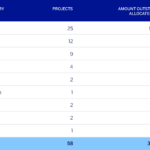
Once again, renewable energy accounted for the largest share of allocations, at 64% of the total (€3.652 billion). This includes 287 loans linked to 58 projects—almost half of them in the United States—covering wind, solar photovoltaic and energy storage facilities, among others, across nine countries and four continents: Europe, Asia, North America and South America. Together, these projects are estimated to generate 11.5 million MWh of renewable electricity a year and avoid approximately 2.9 million tons of CO₂ emissions annually.
Renewable energy projects
BBVA allocated €815 million to energy efficiency, representing 14% of the total portfolio. Financing for more efficient data centers was a particular focus. These new facilities, which are key to the development of artificial intelligence, are designed to consume less energy than conventional data centers while maintaining the capacity and reliability required to deliver critical digital services.
In 2025, BBVA also allocated close to €605 million—11% of the total portfolio—to the construction of low-emission buildings. This category includes financing for mortgages on highly energy-efficient homes in Spain, as well as non-residential buildings that meet energy-efficiency criteria or hold recognized environmental certifications. Clean transportation received around €500 million, used to finance rail infrastructure, low-emission vehicles and electric vehicle charging points. The portfolio also includes financing for 6,285 low-emission vehicles and 48 electric vehicle charging stations.
Carbon capture, utilization and storage, and water management
Among the highlights of this year’s report is financing for carbon capture, utilization and storage (CCUS) infrastructure, designed to address hard-to-abate residual emissions.
BBVA allocated close to €50 million to a project in the United Kingdom involving the transport and management of captured CO₂. The impact attributable to BBVA's financing is estimated at more than 181,000 tons of CO₂ a year, captured and either permanently stored or reused in a process with a net-negative emissions balance.
Another major project is located in Chile’s Atacama Desert, a region facing high water stress. BBVA allocated a total of €44 million to rehabilitate an existing pipeline and build new infrastructure to carry seawater to two copper mines. The project significantly reduces the use of freshwater in an activity that is particularly water-intensive.
These results all form part of BBVA’s strategic ambition to support its customers in the transition to a low-carbon economy. Having surpassed its previous target, BBVA is now aiming to channel €700 billion in sustainable business between 2025 and 2029.
BBVA, Global Banking Partner of COP31
On July 27, BBVA announced its participation as the Global Banking Partner of the United Nations Climate Change Conference (COP31), to be held from November 9 to 20 in Antalya, Türkiye. Through the partnership, the bank will work alongside the COP31 Presidency and the United Nations to continue promoting financing for the energy transition and accelerate the implementation of solutions for a low-carbon economy.