What is an electrocontinent? The concept behind Europe’s electrification
An electrocontinent is a continent where electricity plays a greater role than fossil fuels in sectors such as transportation, industry, and buildings. The European Union (EU) aims to move toward this model through its Electrification Action Plan, published in July 2026.

According to the European Commission, around 70% of the EU’s electricity already comes from clean, European sources, yet the share of electricity in final energy consumption has remained stagnant at 23% for a decade. What this means is that consumers such as households, businesses, industry, transportation, and services have not yet made sufficient progress in replacing fossil fuels with electric technologies.
To break through this ceiling, the EU plan will assess an indicative electrification target of 46% by 2040. Reaching this figure could reduce the cost of fossil fuel imports by €260 billion a year, while also helping combat climate change.
The European Union’s energy system still relies heavily on fossil fuels—oil, coal and natural gas. The Electrification Action Plan seeks to make a decisive shift toward electricity generated from renewable sources, including solar and wind power. As European Commissioner for Energy and Housing Dan Jørgensen said when unveiling the Electrification Action Plan last July: “We are putting Europe on track to become the world’s first electrocontinent.”
For Miguel Arjona, professor of Constitutional Law at the University of Granada and one of the coordinators of the Master’s Degree in Environmental and Energy Law within the framework of the Arqus Alliance, the term describes a European Union roadmap for creating a large space “where the electricity connecting the entire continent comes from renewable sources. This is a profound transition,” he explains.
From the Draghi report to the Electrification Action Plan: Why does Europe want to become an electrocontinent?
In September 2023, the European Commission tasked Mario Draghi, an Italian economist and politician and former president of the European Central Bank, with conducting a detailed analysis of the future of EU competitiveness. Known as the Draghi report, it flagged the main challenges facing European competitiveness and proposed measures targeting areas such as innovation, decarbonization, and economic security.
The need to change course has become a geopolitical imperative for the European Union. Factors such as Russia’s invasion of Ukraine, the crisis in the Middle East, and persistent geopolitical tensions have accelerated this shift and laid bare Europe’s dependence on external energy sources.
According to Arjona, the new Electrification Action Plan presents a twofold opportunity:
- Gain greater strategic autonomy.
- Use this need to scale up an economic transformation toward the industries of the future, in preparation of what he describes as a “new industrial revolution.”
Regarding the 46% electrification target, European Commission President Ursula von der Leyen has said that “the best way to reduce Europe’s fossil energy dependency is to power our economy with electricity from clean, homegrown sources. Today we are proposing to make Europe the world’s first electro-powered continent.” For Arjona, this will require a profound change in mindset. The goal is not to do the same things with the same or greater capacity, but to radically transform how the system is managed and develop new ways of doing things based on renewable electricity.
How it will affect transportation, industry, and buildings
The path toward a European electrocontinent requires positive action in the three most energy-intensive sectors that still rely heavily on fossil fuels:
- Buildings: The shift centers on replacing gas- or oil-fired boilers with heat pumps, as 67% of heating in buildings still comes from fossil fuels, “much of it wasted through inefficient boilers and poor insulation.” According to the European Commission, this change could reduce the average household heating bill by up to 60%. Arjona notes that the technology has now matured to the point where heat pumps are “extremely efficient” for heating and cooling, although he notes that “biomass boilers, another sustainable energy source, should not be ruled out.”
- Industry: Electrification is already technically feasible for 60% of industrial energy demand. The EU Action Plan seeks to narrow the price gap, as electricity currently costs around three times as much as gas, discouraging investment in electric industrial processes. The aim is to rebalance this price gap between electricity and gas.
- Transportation: This is the most complex sector. Although electric cars can deliver savings of up to 78% compared with combustion-engine vehicles, the expert notes that using green hydrogen is highly inefficient at present, as 80% of the energy is lost in its production: “Producing hydrogen is extremely inefficient from an energy standpoint,” he cautions, arguing that hydrogen should be reserved for uses where direct electrification is not possible.
According to Teresa Ribera, European Commission Executive Vice-President for Clean, Just and Competitive Transition: “Europe’s competitiveness will be built on clean energy. We are giving businesses the confidence to invest, innovate and lead next-generation technologies.”
What role will power grids, energy storage, and consumers play? A distributed, democratized model in which users become prosumers
Electrification requires a new mindset when it comes to managing electricity. Arjona explains it through an analogy: the shift from the television model to the internet model. While today’s energy system is one-way (one provider and many passive recipients), the new distributed energy system allows every individual or community to be both a consumer and a producer (otherwise known as a ‘prosumer’).
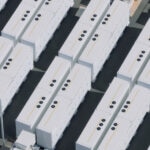
As the University of Granada professor explains, this system could rely on smart grids and artificial intelligence to anticipate demand curves and manage renewable generation, which, unlike gas or coal, is intrinsically intermittent. In this context, where wind and solar account for a large share of total generation, the electricity system needs flexibility—i.e. the ability of energy infrastructure to adjust generation, demand and energy storage in real time—to prevent outages, grid stress, and imbalances. The financial sector will also play a key role in developing new types of contracts and price hedges for a much more complex market.
Spain in the new electricity and renewable energy industry
As Europe’s new energy landscape takes shape, Spain is well positioned to expand renewable generation thanks to its combination of sunshine, wind and, above all, available land. Arjona argues that Spain could become a “very serious competitor to France and Germany,” because producing energy in Spain is much more cost-effective than, for example, in the North Sea, where the installation and maintenance costs of offshore wind turbines are considerably higher.
According to the University of Granada expert, Spain has an “excellent opportunity,” but one that calls for a shift in mindset and for energy to be viewed not as a passive resource, but as a driver of regional balance and future economic growth.
What are the main benefits and challenges of electrification in Europe?
Electrification of the economy, grid interconnection, renewable generation, and storage capacity form the backbone of the future electrocontinent. Key benefits include:
- Making better use of renewable energy generation.
- Becoming less dependent on fossil fuels.
- Increasing energy security.
- Lowering process and operating costs by using more competitive clean energy.
- Improving grid stability.
However, the EU cites several challenges associated with electrification:
- Cost: Electricity costs around three times as much as gas.
- The time, running into years, required to increase grid connections.
- The commercial scalability of innovative technologies.
- The lack of incentives for businesses to switch from fossil fuels to electricity.
Frequently asked questions about Europe as an electrocontinent
What is an electrocontinent?
It is a continent where electricity gains importance over fossil fuels in the energy consumption of buildings, industry and transport.
Why does Europe want to become an electrocontinent?
The European Union aims to reduce its dependence on imported fossil fuels, strengthen energy security and improve the competitiveness of its economy.
What electrification target is the EU considering for 2040?
The European Commission is considering assessing an indicative target of 46% of final energy consumption by 2040, compared with 23% today.
Which sectors will need to be electrified?
The Action Plan focuses particularly on industry, transport and buildings, sectors that still rely heavily on fossil fuels.
What role will electricity grids play?
Greater electrification requires stronger grids, easier connections, and more storage and flexibility to better match electricity production and consumption.
What benefits can electrification bring?
According to the European Commission, electrification can reduce external energy dependence and certain energy costs, although it requires investment in grids and electric technologies.