How to Watch a Solar Eclipse Safely and Responsibly
The total solar eclipse due to take place on August 12, 2026 will be one of the most notable astronomical events visible from Spain. However, to enjoy it safely and responsibly, it's important to protect your eyes, plan your travel in advance, and minimize your environmental footprint and impact on local communities.

A solar eclipse occurs when the Moon passes between the Earth and the Sun, casting its shadow on our planet. On August 12, observers within a narrow path across Earth's surface will see the Moon completely cover the Sun's disk, revealing the Sun's corona.
Total or partial: Where in the world will each phase be visible?
The path of totality will cross parts of the Arctic, Greenland, Iceland, and Spain, where daylight will briefly give way to darkness and the outer atmosphere of our closest star will become visible to the naked eye. The European Space Agency has produced detailed maps showing the eclipse's path and the percentage of solar coverage across different regions.
According to Spain's national mapping agency, the Instituto Geográfico Nacional (IGN), the eclipse will also be visible as a partial eclipse across northern North America, much of Europe, and western Africa. It will begin at 5:34 p.m. (official time in mainland Spain and the Balearic Islands) over the Bering Sea and end at 9:58 p.m. over the Atlantic Ocean. The event will last a total of 264 minutes (just under four and a half hours).
How to observe the August 12, 2026 solar eclipse safely
“It's important to remember that you should never look directly at the Sun. Under normal conditions, its intense brightness causes us to instinctively look away—a natural mechanism that protects our eyes,” explains engineer Antonia Varela Pérez, director of the Starlight Foundation, an organization established by the Institute of Astrophysics of the Canary Islands to promote astronomy and protect dark skies.
However, during an eclipse, as the Moon gradually covers the Sun and ambient light levels decrease, “it creates a false sense of safety that can mistakenly lead people to believe it's safe to look at the Sun without protection,” she says.
According to the expert, these are the main precautions to keep in mind:
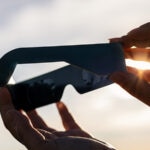
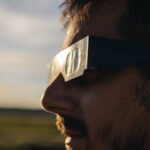
- Protect your eyes: Forget homemade viewing methods. During every partial phase of the eclipse, you must wear certified eclipse glasses that comply with ISO 12312-2. These are available from opticians, astronomy retailers, some supermarkets, and ONCE sales outlets. “Even when part of the Sun is covered,” Varela explains, “every visible point on its surface continues to emit extremely intense radiation—more than enough to damage the macula, the central part of the retina responsible for our sharpest vision.” Because the retina has no pain receptors, this damage can occur without the person realizing it. As the partial phases come to an end, Baily's beads (bright points of light caused by sunlight shining through valleys on the Moon's surface) and the diamond ring effect (the last burst of sunlight shining through a lunar valley) will appear. Immediately afterward, totality begins. “That is precisely when you should remove your eclipse glasses to enjoy the corona in all its glory. As soon as the first ray of sunlight reappears, you must immediately put your certified eclipse glasses back on.”
- Be careful with optical devices: Never observe the Sun through cameras, video cameras, telescopes, binoculars, or similar equipment unless they are fitted with certified solar filters.
- Consider projection viewing: the IGN recommends projecting an image of the Sun onto a piece of cardboard, a screen, a wall, or a ceiling using a simple pinhole projection method.
- Wear sunscreen while you wait. Protect yourself from sun exposure before the eclipse begins.
Where to watch the eclipse in Spain and the kind of weather conditions that may improve viewing
Spain is one of the most privileged vantage points for this eclipse. The path of totality will cross the Iberian Peninsula from west to east, with particularly favorable viewing conditions across northern Spain and parts of the Mediterranean coast. As the IGN—which has developed an interactive regional eclipse viewer—points out, Spain “is the best place in the world to see the eclipse, so large numbers of eclipse chasers and tourists are expected to travel here.” Adding to the appeal, the eclipse takes place just before the peak of the Perseid meteor shower, popularly known in Spain as the Lágrimas de San Lorenzo (Tears of St. Lawrence).
The duration of totality will vary depending on your exact location. Some areas will experience more than a minute of daytime darkness, although the precise duration will depend on where you are within the path of totality. The IGN provides detailed estimates for locations across the country:
- Galicia: The first region in Spain to experience totality. In A Coruña, for example, totality will last 76 seconds beginning at 8:28 p.m.
- Asturias: The regional government has created a municipality-by-municipality map showing the duration of totality. In most locations, maximum eclipse conditions will last around 110 seconds.
- Castile and León: Burgos and Palencia lie very close to the centerline of the eclipse, where totality lasts longest. The flat landscapes of areas such as Tierra de Campos will provide excellent viewing conditions. In Burgos, totality will last 104 seconds beginning at 8:29 p.m.
- Basque Country: The Sun will be completely covered in parts of the provinces of Bizkaia and Álava. In the city of Vitoria-Gasteiz, totality will last about 60 seconds.
- Aragon: The eclipse will be total across the province of Teruel, where totality will last 94 seconds.
- Valencian Community: The province of Castellón offers some of the best viewing locations. In Peñíscola, Benassal, Onda, and Castellón de la Plana, totality will last around 95 seconds.
- Balearic Islands: The islands will be the last place in Spain to experience totality. In Palma de Mallorca, it will last 96 seconds. Travel to coastal areas and other popular viewing spots is expected to result in traffic restrictions.
When choosing where to watch the eclipse, it's also worth considering the area's typical weather conditions. According to data collected by the Spanish State Meteorological Agency (AEMET) over the past 16 years, skies are likely to be mostly clear or only lightly clouded during the eclipse. However, for a more accurate forecast, it's important to check the weather in the days leading up to the event.
How to enjoy the eclipse while minimizing your impact on the environment
The most eagerly anticipated astronomical event in decades is expected to bring more than 446,000 additional visitors to Spain and generate nearly €350 million in net economic benefits. These figures, taken from an impact study drawn up by Spain’s Ministry of Economy, Trade and Business, also highlight a challenge: the total solar eclipse will draw thousands of people to the areas where it will be most visible—most of them in rural parts of Spain and environmentally sensitive natural areas—making careful, sustainable planning essential.
The director of the Starlight Foundation emphasizes one simple idea: “An eclipse should be enjoyed safely, responsibly, and with respect for the environment. That means that when we leave the place where we watched it, we should leave it exactly as we found it or, if possible, even better.” Here are some of her tips:
- Sustainable mobility. Whenever possible, choose more sustainable ways to get there: carpool, use public transportation, or walk or bike to viewing sites. It's important to avoid traffic congestion and overcrowding.
- Zero waste. Bring a small bag to collect all your trash. Besides helping preserve the landscape, this is especially important in the middle of summer, when wildfire risk is very high,” Varela says.
- Respect for the environment and local communities. Many of the best places to experience the eclipse are rural areas of significant environmental value. It's essential to avoid unnecessary noise, respect local residents' peace and quiet, and minimize any disturbance to wildlife and ecosystems. For the director of the Starlight Foundation, the eclipse is a full-sensory experience: “Feeling how the wind changes, how the temperature drops, how the light is transformed, and how nature responds to the phenomenon. In some places, crickets will begin to chirp, birds will change their behavior, and the landscape will take on an atmosphere that is hard to put into words.”
- Keep artificial light to a minimum. Although the eclipse occurs during the day, one of the most exciting aspects is watching the landscape gradually darken. “If we avoid unnecessary flashes, spotlights, or other bright lights, we can experience this remarkable transformation in our surroundings much more fully, while also allowing those around us to enjoy it to the fullest,” says Varela, who is also director of Tenerife's Museum of Science and the Cosmos.
How the eclipse can benefit rural tourism and local economies
Major astronomical events can create opportunities for rural areas. Here are some of the benefits of astrotourism:
- Helps spread tourism demand more evenly across the year.
- Encourages visitors to stay longer.
- Spreads visitor flows out to rural and inland areas.
- Creates new business and specialized employment opportunities.
- Brings people who tend to be highly environmentally conscious and generally well educated, and who spend more on average than other types of tourists.
Antonia Varela says that “the data show this is a rapidly expanding sector. According to TripAdvisor, interest in dark-sky tourism has grown by 320% over the past three years, a trend that is consistent with the Starlight Foundation's own demand indicators. Booking.com, meanwhile, reports that 58% of its travelers are interested in astrotourism experiences.”
Upcoming solar eclipses visible from Spain
The 2026 eclipse will be the first in a particularly significant series for Spain. In the years ahead, the country will experience other notable events:
- Total solar eclipse on August 2, 2027: totality will be visible in parts of southern mainland Spain, Ceuta, and Melilla before continuing across North Africa toward Egypt and Saudi Arabia.
- Annular solar eclipse on January 26, 2028: it will also be visible from Spain, especially from much of the Mediterranean coast and northeastern mainland Spain.
This series positions Spain as a prime destination for the growth of astrotourism in the years ahead. “I am convinced,” Varela says, “that the 2026 eclipse will mark a turning point. As with any major event, it will be an opportunity to learn, improve, and build on what works well. The lessons we learn will leave us even better prepared for future eclipses and help us welcome visitors in an increasingly well-organized, safe, and sustainable way.”
Frequently asked questions about the August 12, 2026 solar eclipse
When is the August 12, 2026 total solar eclipse?
The total solar eclipse will take place on August 12, 2026. It will be visible as a partial eclipse across much of Europe and in totality along a narrow path crossing parts of the Arctic, Greenland, Iceland, and Spain.
How can you watch a solar eclipse safely?
During the partial phases, you must use certified eclipse glasses that comply with ISO 12312-2. You can also view it using projection methods. Never look directly at the Sun or use cameras, telescopes, or binoculars without proper solar filters.
Where is the best place to watch the eclipse in Spain?
The path of totality will cross the Iberian Peninsula from west to east, making the total eclipse visible across parts of northern mainland Spain, Aragon, the Valencian Community, and the Balearic Islands. The duration of totality will vary depending on your location.
How can you reduce your environmental impact when viewing the eclipse?
To minimize your impact on the environment, use public transportation or carpool, take all trash with you, respect wildlife and natural areas, and avoid unnecessary artificial lighting during the eclipse.
What benefits can the eclipse bring to rural tourism?
The influx of visitors can boost economic activity in rural towns by increasing demand for lodging, restaurants, and other astrotourism-related activities, while also helping spread tourism demand more evenly throughout the year.