Who’s Who at COP31: The Individuals Tasked with Shaping the Future of Climate Negotiations in Türkiye
The 31st Climate Summit (COP31), to be held in the Turkish city of Antalya in November, will bring together several key figures tasked with driving forward global climate negotiations. Murat Kurum, Fatma Varank and Samed Ağırbaş, among other names, will coordinate a conference that aims to turn political commitments into tangible outcomes in electrification, urban resilience and the circular economy.
Photo: Flickr

The most senior COP31 leadership positions will be shared between representatives of Türkiye and Australia under a new co-leadership model. Those appointed to these roles will play a decisive part in the conference, as they are responsible for coordinating negotiations and facilitating international agreements on climate change.
They play a key role in securing the final decisions adopted by the Conference of the Parties (COP), held under the framework of the United Nations Framework Convention on Climate Change (UNFCCC). In doing so, they help accelerate the implementation of the Paris Agreement.
How is the COP31 Presidency structured?
COP31 will run from Monday, November 9 through Friday, November 20, 2026. Prominent scientists, climate activists and representatives of international public institutions will gather at the Antalya Expo Center, located in the Soğucaksu district.
The Climate Summit is built around a leadership structure with clearly defined responsibilities for overseeing the negotiations, logistics and engagement of the various stakeholders involved.
Murat Kurum: the driving force behind COP31’s strategic goals
The appointment of the COP31 President is particularly significant, as the position carries considerable influence over the conference and its participants. This role will be held by Murat Kurum, Minister of Environment, Urbanization and Climate Change of the Republic of Türkiye. For the Turkish minister (born Ankara, 1976), the role extends well beyond politics, as he is ultimately responsible for turning climate agreements into tangible results.
He will lead an agenda whose strategic priorities were presented during the Bonn Climate Change Conference in June 2026 and are firmly focused on implementing agreements that have already been reached: “What the world needs today is not more promises, but delivery,” he has proclaimed in recent public addresses.
Under his leadership, the Presidency has set three global quantitative targets:
- Clean energy transition: increase the global electrification rate to 35%.
- Urban resilience: reduce energy intensity in urban areas by 25%.
- Circular economy: increase the global circular material use rate to at least 15%.
Kurum’s vision is also strategic in nature. His approach is built around three guiding principles—dialogue, consensus and action—meant to transform commitments into positive outcomes. He is also responsible for developing Türkiye’s legal framework for climate policy, including drafting the Climate Law and low-emissions development strategies. In the context of COP31, the ministry he heads up serves as both the host institution and the operational body for the conference. This also includes several of its deputy ministers, who will play key roles throughout the summit.
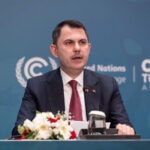
Murat Kurum, Minister of Environment, Urbanisation and Climate Change of the Republic of Türkiye. Photo: Flickr
Other key figures at the Climate Summit: who is leading the organization and negotiations at COP31?
Aside from Kurum, several members of the Turkish and Australian delegations will play influential roles over the course of the event:
- Fatma Varank (Zonguldak, 1972) serves as COP31 Chief Executive Officer (CEO). She also acts as the conference’s chief climate negotiator. Appointed in April, she has repeatedly called for the development of more resilient, energy-efficient cities while championing greater electrification.
- Samed Ağırbaş (Istanbul, 1994) serves as the COP31 Climate High-Level Champion. The role of Climate High-Level Champion was established at COP21 in Paris. Each COP Presidency appoints a Champion to work alongside their predecessor. In this case, Ağırbaş succeeds Dan Ioschpe. Appointed by Murat Kurum in January, his primary responsibility is to serve as a bridge between governments, the private sector, investors and civil society in order to accelerate and strengthen global climate action. He is also President of the Zero Waste Foundation and is internationally recognized for his contributions to climate diplomacy and urban development. He has also expressed an interest in increasing engagement with African countries.
- Ömer Bulut (Trabzon, 1968) is responsible for the construction and physical infrastructure of the conference venue and related facilities. His objective is to ensure that the conference spaces and logistical infrastructure are completed on schedule and meet the highest standards required for an event such as COP31. He also happens to serve as Türkiye’s Deputy Minister of Environment, Urbanization and Climate Change.
- Burak Demiralp (Ankara, 1986) oversees operational and logistical processes. He also serves as one of Murat Kurum’s deputy ministers. He heads up key initiatives, including the summit’s preparation agenda and the work of the Presidency, with a particular focus on building climate-resilient cities.
- Halil Hasar (Bingöl, 1975) heads climate diplomacy within the executive structure of the COP31 Presidency. He also plays an active role in developing Türkiye’s principal climate policy instruments, including the implementation framework for the Climate Law, the establishment of the Emissions Trading System, and ongoing work to align the country with the Green Taxonomy.
- Chris Bowen (Sydney, 1973) serves as President of the COP31 negotiations. He plays a pivotal institutional role, and Murat Kurum has publicly stated that he has “full confidence in his work.” Bowen believes that continued reliance on fossil fuels is not the solution and has called for a new global strategy to achieve decarbonization. He has also argued that today’s geopolitical landscape and global energy crisis require the world to “accelerate climate action, not delay it.” In his view, increasing the electrification of the economy is “the pathway to reducing emissions” while also “improving energy security and sovereignty.”
- Sally Higgins (Queensland) has been appointed Youth Climate Champion. She will act as a liaison between the Presidency and children and young people around the world. As she has explained on social media, her goal is to ensure that young people’s voices are meaningfully reflected in climate decision-making. This includes raising the visibility of youth across the COP31 agenda, creating opportunities for young people to contribute to climate policies and action, and promoting support for youth-led solutions that drive greater climate ambition and implementation.
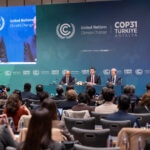
Photo: Flickr
Emine Erdoğan’s role in COP31-related initiatives
Emine Erdoğan is the First Lady of the Republic of Türkiye. The wife of Turkish President Recep Tayyip Erdoğan has been a leading advocate for social and environmental causes, most notably through her promotion of the Zero Waste initiative, which she launched in Türkiye in 2017 with an international vision. Supported by the United Nations, the initiative aims to increase the recycling rate for all recyclable waste to 60% by 2035.
The Zero Waste Foundation, chaired by Samed Ağırbaş, works closely with public institutions, the private sector and non-governmental organizations through educational initiatives, research and sustainability-focused project development.
In the run-up to COP31, and reflecting one of the conference’s central themes, the Foundation organized the Zero Waste Forum, which was held from June 5 to 7 at Istanbul Atatürk Airport. Emine Erdoğan and her Zero Waste initiative have received international recognition, leading the UN General Assembly to designate March 30 as the International Day of Zero Waste. Speaking during the 2026 observance, Erdoğan emphasized the significance of the initiative: “Every morsel of food wasted represents the rights of someone whose life depends on it. It also echoes the cries of those suffering from hunger and thirst in war zones. Let us not forget that all humanity bears the consequences of food loss and waste.”
United Nations representatives at COP31
UN officials also play an essential role in facilitating the negotiations and providing technical support. Among them is Simon Stiell, Executive Secretary of the UNFCCC since 2022. His mission is to support the Presidency in ensuring that the multilateral process delivers ambitious outcomes and advances the objectives of the Paris Agreement.
The Presidency also works closely with UN-Habitat on resilient cities, the United Nations Environment Programme (UNEP), on environmental issues, and UNESCO on information integrity, as well as with strategic partners such as the International Energy Agency (IEA), which provides reliable data, and the International Renewable Energy Agency (IRENA), which supports the technical modeling of energy targets.

Frequently asked questions about COP31
What is COP31?
COP31 is the 31st Conference of the Parties to the United Nations Framework Convention on Climate Change (UNFCCC). It brings together governments, international organizations, businesses and civil society to negotiate measures aimed at strengthening climate action and advancing implementation of the Paris Agreement.
Where and when will COP31 take place?
COP31 will be held in Antalya, Türkiye, from November 9 to 20, 2026. The city will host the formal negotiating sessions, ministerial meetings and side events organized by governments, international institutions and other participating civil society stakeholders.
Who is presiding over COP31?
COP31 is chaired by Murat Kurum, Türkiye’s Minister of Environment, Urbanization and Climate Change. His role is to coordinate negotiations among the delegations and facilitate the adoption of agreements during the conference.
How is the conference leadership structured?
The COP31 Presidency is supported by a team of political, technical and operational leaders. Key figures include Chief Executive Officer Fatma Varank, President of the Negotiations Chris Bowen, Climate High-Level Champion Samed Ağırbaş, and several officials tasked with logistics, climate diplomacy and infrastructure.
What role does the United Nations play at COP31?
The UNFCCC Secretariat, led by Simon Stiell, provides technical and institutional support to the Presidency to facilitate the negotiations and ensure continuity in the international process to address climate change.