Antalya to Host COP31: Sustainable Tourism, Culture and Climate Challenges
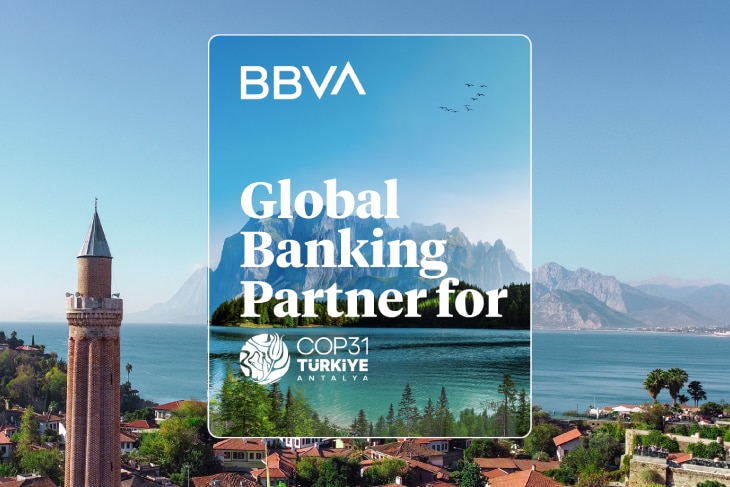
Antalya will host COP31, the United Nations Climate Change Conference, from November 9 to 20, 2026. The city is seeking to consolidate a sustainable model for urban development and tourism while tackling challenges such as water stress, rising temperatures and sea-level rise.

Antalya’s selection as host of COP31 goes beyond logistics. It also sends a message from the Turkish government, demonstrating Türkiye’s “sense of responsibility at the global level,” its constructive leadership, and its strong commitment to climate action. At a time when the UN process is moving into what Simon Stiell, Executive Secretary of the United Nations Framework Convention on Climate Change (UNFCCC), calls an “era of implementation,” the focus has shifted from pledges to delivering tangible results in the real economy.
Antalya, described by COP31 President Murat Kurum as a “bridge between civilizations and cultures,” offers an ideal setting to close the gap between diplomatic commitments and climate action that can be seen in cities, in the countryside and in energy systems—but above all, “in people’s daily lives.”
The summit aims to turn political intent into collective action that leaves no one behind. The incoming Presidency wants COP31 in Antalya to be remembered as a pivotal summit for accelerating the implementation of climate commitments. As one of the world’s leading tourism hubs, the Turkish city offers a real-world test case for showing that sustainability and economic development can coexist under a resilient management model.
Why is Antalya hosting COP31?
Antalya will host the climate summit under an unprecedented shared-leadership model, formalized following an agreement reached at COP30 in Belém. Under this arrangement:
- Türkiye holds the host Presidency, with full responsibility for operational and logistical matters, and also leads the Global Climate Action Agenda.
- Meanwhile, Australia has exclusive authority over the political negotiations, with Minister Chris Bowen serving as President of Negotiations.
This strategic partnership links the climate priorities of the Mediterranean basin with those of Pacific nations, strengthening cooperation between the two regions.
To underpin its ambitious agenda with technical expertise, the Presidency has brought in the International Energy Agency (IEA) and the International Renewable Energy Agency (IRENA) as strategic partners for target modeling and data-driven decision-making. To provide insight into the host city’s local challenges, the summit is drawing on experts and academics such as Cenk Demiroğlu, a Turkish climate change researcher and associate professor at Umeå University in Sweden. Demiroğlu is a leading expert on the relationship between climate change and tourism. In addition to his work at the Istanbul Policy Center (IPC) and his experience as co-chair of the Commission on Climate, Tourism and Recreation of the International Society of Biometeorology, his career includes helping design climate services for the European Copernicus program and co-authoring seminal studies on Türkiye’s Turquoise Coast that shed light on the climate vulnerability of the COP31 host city.

Sustainable tourism in Antalya: a management model for the climate crisis
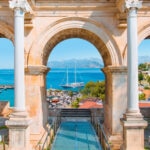
Antalya’s tourism management model is built around a hotel sector operating at massive scale and seeking to lead the country’s green transition. As Demiroğlu explains, “Antalya is a giant of international tourism, with around 700,000 tourist beds—a figure that rises well above one million when second homes and vacation rentals are included.” The province currently accounts for “50% of the establishments in Türkiye certified by the Global Sustainable Tourism Council (GSTC),” a standard that requires plans for climate adaptation and emissions reduction and will become mandatory across the country’s tourism sector in 2030.
This effort aligns with the Zero Waste initiative, led by Türkiye’s First Lady, Emine Erdoğan. The platform aims to halve the rate of growth in global waste by 2035. The COP31 Presidency has also launched the Resilient Cities project, which aims to reduce energy-consumption intensity in buildings by 25% by 2035. However, Demiroğlu points to a critical challenge in tourism management: dependence on air travel. “No matter how ‘green’ the destination itself becomes, net emissions will remain high because of the large amounts of fossil fuel consumed by air travel,” says the expert, who identifies “this paradox as a top priority to resolve on the global agenda.”
Türkiye’s climate challenges in the Mediterranean basin
Despite its progress on sustainability, Antalya lies in one of the regions of the world most vulnerable to global warming. According to Demiroğlu, a preliminary modeling study as early as 2017 found that “Antalya and Türkiye’s Aegean coast will be exposed to more frequent and intense extreme events, including storms, floods, wildfires and heat waves, even before the middle of the century.”
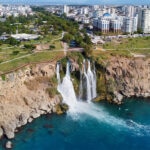
In this respect, water stress is another looming threat to key tourism sectors such as golf. In Belek, Türkiye’s golfing hub in Antalya, the water deficit is projected to increase by 44% by mid-century as the climate becomes more arid. This will intensify competition for water between local communities and the tourism industry.
Extreme temperatures are also reshaping the concept of thermal comfort. Demiroğlu’s research indicates that under high-emissions scenarios, Antalya could face dangerous levels of heat stress for two consecutive months each year by around 2070. “Antalya’s transformation into a ‘human oven’ will turn this from a tourism issue into one requiring radical local adaptation and global mitigation action,” Demiroğlu says. Add to this global sea-level rise, which could reach between 0.60 and 1.10 meters by 2100 if warming exceeds 4°C, according to the Intergovernmental Panel on Climate Change (IPCC). As Demiroğlu notes, this threatens not only coastal hotel infrastructure but also priceless archaeological sites on the shoreline, including Patara and Phaselis. At a COP where “oceans and seas” is one of its pillars for action, that is impossible to ignore.
How could COP31 shape global tourism?
COP31’s legacy for global tourism will be judged by its ability to move beyond rhetoric and deliver practical results in the real economy. The gathering at the Antalya Expo Center will provide a global showcase for the goal of raising global electrification to 35% by 2035—a key step in decarbonizing transport and tourism buildings.
The COP31 Presidency hopes Antalya can demonstrate—as highlighted at the Bonn meetings—how digital infrastructure and artificial intelligence can improve grid efficiency and strengthen transparency in climate data. Demiroğlu cautions, however, that vulnerability remains high and tourism stakeholders should not misread current growth trends. “A tipping point will come when Antalya and other destinations become too hot not only for tourism, but for people to live there in good health,” the expert concludes. Antalya’s success as host will depend on its ability to catalyze urgent global mitigation action that safeguards the future of tourism destinations across the Mediterranean and around the world.
Frequently asked questions about COP31 in Antalya
What is COP31?
It is the 31st Conference of the Parties to the United Nations Framework Convention on Climate Change.
When will COP31 take place?
From November 9 to 20, 2026.
Why was Antalya chosen?
Türkiye proposed Antalya as the host city because of its importance as a tourism destination, its strategic location and the climate challenges facing the Mediterranean.
What climate challenges does Antalya face?
Water stress, heat waves, wildfires, flooding and sea-level rise.
What role will tourism play?
The city aims to show how a tourism destination can move toward more resilient and efficient management models.