What Are Resilient Cities and Why Are They Key to Tackling Climate Change?
Resilient cities are those that prepare to cope with extreme weather events such as heat waves, floods, droughts and wildfires. They use urban planning solutions and adapt their infrastructure to reduce the impacts and speed up recovery.

The resilient cities of the future will be those able to adapt, improve and put their citizens’ health and well-being first. The term that best defines them is resilience. That is how resilient cities emerged: cities that actively seek to reduce the risk of natural disasters or crises of any kind through their planning and implementation.
According to the United Nations, more than half the world’s population lives in urban areas, a share expected to reach 70% by 2050. Around 1.1 billion people “currently live in slums or slum-like conditions in cities, and 2 billion more are expected in the next 30 years.”
The main challenge—as the UN acknowledges—is that most of these cities are not ready for the future. Cities cover barely 3% of the Earth’s land surface, but account for between 60% and 80% of energy consumption and 75% of carbon emissions. Many cities are also more vulnerable to the effects of climate change and natural disasters because of their high population density and their location, so strengthening urban resilience is crucial to preventing human, social and economic losses.
What are the main climate risks facing cities?
Cities face risks such as droughts, heat waves, floods and wildfires, which climate change can make more frequent or intense. They must also manage other environmental health problems, such as air pollution. According to an analysis published in the scientific journal The Lancet, European cities are not adapting to climate change fast enough to protect their residents.
Roger Sauquet, professor of Architecture at the Universitat Politècnica de Catalunya (UPC) and director of the Centre de Recerca per a l’Administració Local (CRAL), explains that the most severe climate risks for the built environment are those related to fire and water, particularly floods and wildfires.
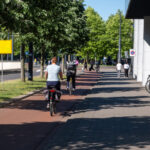
The expert draws a distinction between:
- Mitigation actions: he says these “tend to lessen the effect of climate change itself from a global perspective, while from a local perspective they seek to reduce the effects of climate change on people, buildings and public space.”
- Adaptation actions: Sauquet explains that “they accept a certain degree of coexistence with risk or with disruptive climate events when they occur. In these cases, cities work to ensure that recovery is quick, affordable and causes as little disruption as possible.”
What measures help cities adapt to climate change?
According to the Intergovernmental Panel on Climate Change (IPCC) and the United Nations Office for Disaster Risk Reduction (UNDRR), the main measures to protect against climate impacts fall into three areas of action:
1.Nature-based solutions and green infrastructure:
- Reducing heat islands. Green roofs, urban tree cover and green corridors can help lower ambient temperatures by as much as 2°C or 3°C.
- Sustainable water management. Creating floodable parks and permeable pavements that drain rainwater, reducing the risk of flash floods and recharging local aquifers.
2.Resilient infrastructure and energy efficiency:
- Climate-adapted buildings. Retrofitting buildings with thermal insulation, cross ventilation and reflective materials to improve their performance in extreme temperatures.
- Protected public networks. Strengthening critical infrastructure (power supply, drinking water and mass transit) to reduce their vulnerability through digitalization and infrastructure upgrades.
3.Urban planning, governance and early response:
- Early warning systems. Deploying networks of weather sensors and data analytics to warn the public in advance of heat waves or heavy rainfall.
- Restrictive land-use planning. Banning urban development in areas at high risk of flooding or landslides, together with emergency plans coordinated with local residents.
For Roger Sauquet, the solution lies in “studying each phenomenon very carefully and seeing what is affecting each area.” This is “the starting point for beginning to work with a complex problem-solving approach that combines different scales, timeframes and objectives,” he explains. “There are geographic, meteorological, social and urban-planning factors that can be addressed,” he says.
What are the benefits of urban resilience?
The benefits of resilient cities are directly linked to these areas of action: measures that aim to reduce certain impacts of climate change and better protect people, without eliminating the risk entirely. Main positive effects:
- Disaster protection: resilience measures help reduce physical damage and loss of life from extreme events such as floods, heat waves and severe storms through reinforced infrastructure and urban planning.
- Better water management: they incorporate solutions such as “sponge cities” (floodable parks, permeable pavements and green roofs) that reduce flooding, recharge aquifers and help alleviate water scarcity.
- Smaller carbon footprint and cleaner air: they promote compact city models and active mobility (walking and cycling), which can reduce car use and help cut carbon dioxide (CO₂) emissions. Adding vegetation and shaded areas also helps moderate the urban heat island effect. According to The Lancet analysis, some northern European cities have already made progress in this area.
- Improved road safety and accessibility: they provide better connections between homes, public transportation networks and employment centers, while protecting pedestrians and cyclists to reduce traffic accidents.
- Economic stability and attracting investment: they keep critical services running during crises, which builds market confidence and protects long-term economic development.
- Social cohesion and justice: they involve local communities in decision-making, giving priority to protecting the most vulnerable groups from sudden or gradual impacts.
What role do cities play in climate action?
As the UPC architecture professor points out, cities can contribute to climate action in several ways:
- Energy. Some parts of cities, such as industrial parks, could host solar panels. Right now, farmland—some of it perhaps not highly productive but of considerable landscape value—is being sacrificed for solar panels, while certain purely urban areas, such as industrial parks, are struggling to play their part in generating energy,” the expert stresses.
- Mobility. A significant share of cities’ CO₂ emissions could be reduced by making public transportation and cycling more accessible.
- Circularity. This applies to both water and food. As Sauquet explains, the water cycle in cities is open: “Cities receive clean water, use it, contaminate it and discharge it back into the environment through treatment plants, but there is no circularity in water management, let alone in managing rainwater,” he says. As for food, the expert says this is “difficult,” but food systems could also become more circular.
- Urban design. The CRAL director highlights the role of paving and vegetation in public and urban spaces. These measures could not only improve water reuse and redistribution, but also create more shaded areas—something some cities lack and need in order to stay cool.
- Buildings. Built-in vegetation, sunrooms, transition areas between indoors and outdoors, and making the most of a building’s internal thermal inertia are some of the aspects Sauquet mentions for strengthening cities’ climate action.
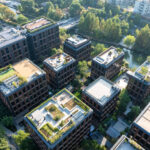
Examples of resilient cities: Copenhagen, Medellín and Barcelona
As climate change accelerates, cities around the world are transforming their urban models to respond to specific risks.
- In northern Europe, Copenhagen has become a model for urban planning thanks to its Cloudburst Management Plan. This comprehensive system, designed after the severe floods of 2011, turns parks and streets into temporary lakes and drainage channels to absorb torrential rain. Taking a similar water-focused approach, Rotterdam has integrated floodable squares and underground reservoirs that protect the coastal city from rising sea levels and storm surges. It also turns water infrastructure into spaces for recreation and community use.
- In Latin America, Medellín stands out for its green corridors: a network of 30 tree-lined routes connected to rivers and streams that has lowered the city’s average temperature. In a 2019 publication, the United Nations Environment Programme quoted Medellín’s mayor’s office as attributing a temperature reduction of more than 2°C to the green corridors project. These corridors help mitigate the urban heat island effect and improve air quality. Singapore, for its part, is pursuing initiatives that integrate biodiversity and infrastructure under its “City in Nature” concept, combining advanced water collection and desalination systems (ABC Waters Programme) with bioclimatic facades and vertical gardens in new buildings.
- On the Mediterranean, Barcelona has rolled out its Pla Clima (Climate Plan), which includes a network of urban climate shelters—public spaces equipped with air conditioning or shade and drinking water—along with the transformation of public space to reduce the effects of increasingly frequent heat waves. Finally, in the eastern Mediterranean, Turkish cities such as Antalya are focusing on developing a more responsible model of tourism.
Why will resilient cities be on the agenda at COP31?
The debate at international climate summits is no longer focused solely on how to curb global warming. It is also about recognizing the reality of climate change impacts on urban environments. Resilience means acting in advance to prevent damage while also giving cities the mechanisms to recover more quickly, affordably and with less disruption after an extreme event.
That is why urban resilience is one of the priorities of the Climate Action Agenda for COP31, to be held in Antalya from November 9 to 20, 2026. The Turkish COP31 Presidency proposes:
- Reduce the energy intensity of the building sector by at least 25% by 2035.
- Reduce emissions across the entire life cycle of buildings, from design and construction through operation and end of life, using low-carbon materials, efficient designs and lower embodied emissions.
- Promote sustainable building certification systems and infrastructure standards that can withstand extreme weather events and other climate risks.

Frequently asked questions about resilient cities
What is the difference between climate change adaptation and mitigation?
Adaptation seeks to reduce the impacts of climate change on people, buildings and infrastructure. Mitigation focuses on limiting global warming by reducing greenhouse gas emissions.
What are sponge cities, and how do they help prevent flooding?
They are cities that incorporate solutions such as floodable parks, permeable pavements and green roofs to absorb or store rainwater or help it soak into the ground, reducing the risk of flooding.
How do green corridors help reduce urban heat?
Green corridors incorporate vegetation and trees that provide shade and help cool the surrounding area. They help reduce the urban heat island effect, although their results depend on local conditions.
What are climate shelters?
They are spaces that offer protection from extreme temperatures by providing shade, cooling systems or access to drinking water. Their aim is to reduce people’s exposure to heat, especially among the most vulnerable groups.
Why are early warning systems important in cities?
They make it possible to anticipate dangerous weather events, such as heat waves or heavy rainfall, warn the public and trigger preventive measures and emergency plans.
What role does urban resilience play at COP31?
Urban resilience is one of the priorities of the Climate Action Agenda for COP31, which will be held in Antalya from November 9 to 20, 2026. The agenda includes measures on the energy efficiency of buildings and on adapting infrastructure to climate risks.