Javier Rodríguez Soler: “Climate Finance Will Be at the Heart of Discussions at COP31”
In just over two weeks, BBVA will take part as global partner bank at the upcoming UN Climate Change Conference (COP31), which will take place from November 9 to 20 in Antalya, Türkiye. According to Javier Rodríguez Soler, BBVA’s Global Head of Sustainability and Corporate & Investment Banking (CIB), “climate finance will be at the heart of discussions at COP31.” In this interview, he explains, among other things, the role the financial sector can play in a new phase focused on implementing climate commitments, what BBVA has planned for the summit, and why sustainability continues to represent a major business opportunity in the current international landscape.

Q: COP31 is being framed as the implementation summit. What should moving from ambition to action actually entail?
A: It means focusing even more closely on execution. Climate targets have been set over the past several years. Now we need to focus on how to turn them into reality through concrete, viable and scalable investments and projects. COP31 must help mobilize the financing needed to turn that ambition into reality. Financing is not simply an add-on to climate policy; it is a means of putting that policy into practice.
We will work alongside the COP31 Presidency and the United Nations to champion financing for the energy transition and solutions that support the shift toward a low-carbon economy. It is also important to clarify that BBVA does not participate in the COP’s official political negotiations.
We will also co-chair the Climate Finance and Investment Working Group within the summit’s business forum. The group’s aim is to tackle the barriers to mobilizing climate finance and draw up recommendations for the COP31 Presidency.
Q: Why has BBVA decided to take this step and become the global bank of COP31?
A: Sustainability is a strategic priority and a driver of growth for the bank. We want to support the economy and businesses through their transition and help turn plans and investments into tangible projects.
The Climate Change Conference provides an ideal setting for making real progress along these lines. It brings together governments, businesses, financial institutions, experts, and civil society. For us, it is an opportunity to listen to and support both existing and prospective clients, share knowledge and experiences from projects already underway, and explore opportunities for collaboration.
This COP also happens to be taking place in Türkiye, one of our key markets, where we have a significant presence through Garanti BBVA. The summit can help strengthen public-private partnership and attract investment to support the transition to a low-carbon economy.
There is also an important internal dimension. Our participation gives us an opportunity to demonstrate how sustainability is embedded in the day-to-day work of BBVA’s teams. Behind every transaction and project are professionals from different business areas and countries who help our clients navigate their transformation challenges.
Q: Why do you believe banks have an important role to play in this implementation phase?
A: Because the energy transition and the broader transformation of the economy require investment. The financial sector can help connect projects with capital, structure financing, share risks and support companies as they implement their transition plans.
This is particularly important for technologies and projects that have yet to achieve the scale they need. Banks can help bridge the gap between innovation and investment, connect clients with public and private capital, and support clean technology projects being deployed for the first time under real-world conditions and on a commercial scale.
Financing is no longer on the sidelines. Climate finance is the bridge between ambition and implementation, and it will be at the heart of climate discussions at this COP.
Q: What does BBVA have planned for COP31?
BBVA has embraced an ambitious commitment to participating in COP31, reflecting the importance of sustainability within our strategy. We intend to play an active role throughout the two-week summit.
We will have a pavilion in the Green Zone, where we plan to hold six or seven themed sessions each day. These will include panel discussions, conversations, roundtables and project presentations. Most sessions will also be available to stream through a dedicated microsite we have set up on bbva.com, allowing us to share the discussions and insights from Antalya with audiences beyond the summit itself.
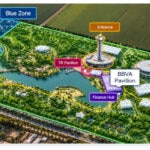
The pavilion will also serve as a working space, with dedicated areas set aside for clients and bilateral meetings. The aim is to discuss specific projects, identify opportunities, and explore new avenues for collaboration.
BBVA will also have a strong international presence at the summit. A sizable delegation of BBVA professionals from the various countries where we operate will also be attending, alongside our local colleagues from Garanti BBVA, who will, in a sense, be our hosts at the summit.

Q: BBVA has outlined six major challenges as part of its vision for COP31. What are they, and what is the bank already doing to address them?
A: We have flagged six areas where we believe progress is needed to accelerate the transition: financing electrification and sustainable infrastructure at scale; making clean technologies, or cleantech, bankable; supporting sustainability across value chains; fostering resilience and the preservation and regeneration of natural capital; making sustainability more accessible; and contributing to a sustainable financial system.
Q: You mentioned electrification. Why is it so important?
A: Because electrification is central to so many aspects of the energy transition. We’re talking about electricity generation, but also the construction and development of power grids, energy storage, and the electrification of demand in key sectors such as transportation, industry, and construction. The COP31 Presidency has placed electrification at the center of its agenda, with the goal of increasing electricity’s share of final energy demand from 23% today to 35% by 2035.
Achieving this will require enormous investment, particularly in emerging markets. We need to scale up international climate finance for developing economies and emerging markets, supporting the roadmap to mobilize at least $1.3 trillion annually by 2035.
Q: Another priority is natural capital. Are we broadening the climate debate beyond emissions?
A: Yes. Climate, water, biodiversity, soil, and economic activity are all interconnected. Aside from reducing emissions, we need to address adaptation and resilience to the physical impacts of climate change.
The United Nations Environment Programme (UNEP) estimates that developing countries will need between $310 billion and $365 billion annually through 2035 to adapt to climate change and its impacts, compared with the $26 billion mobilized in 2023. That gap illustrates the scale of the challenge.
As banks, we can finance investments and incorporate issues such as physical risks, water and biodiversity into our risk management practices. BBVA has already integrated water management into its climate and environmental risk framework and is promoting and participating in specific transactions in several countries. These include a loan to refinance drinking water treatment infrastructure in Australia and financing for a project in Brazil to expand drinking water and sanitation services across 155 municipalities.
Q: How can we ensure that this transformation also reaches SMEs, households, and emerging economies?
A: The transition must accommodate different economic and social circumstances. Not all sectors, companies, households, or countries are starting from the same position, or are equally capable of making the investments required.
That’s why one of our six challenges is to make sustainability more accessible. This means improving access to financial and non-financial solutions for SMEs, women entrepreneurs, rural communities, and other groups, paying particular attention to emerging markets.
Here, too, we can single out concrete initiatives in various countries. For instance, Garanti BBVA has 20 years of experience running programs for women entrepreneurs. In 2025, BBVA Peru issued its first gender-focused social bond, while BBVA Mexico has allocated more than €300 million to finance the digitalization of SMEs and microenterprises in remote areas.
Q: BBVA’s message about “moving from ambition to action” is clear enough. What figures demonstrate how the bank is putting this into practice?
A: We measure the progress of this strategy through our activity with clients. BBVA has set a target of channeling €700 billion into sustainable business between 2025 and 2029, after reaching its previous €300 billion target for the 2018–2025 period in December 2024, a year ahead of schedule.
In 2025, we channeled €134 billion, up 44% from the previous year. We channeled a further €36 billion in the first quarter of 2026, bringing the total since the start of the new target period to €170 billion.
But execution is not just an aggregate figure. What matters is that these numbers represent actual transactions and investments in electrification, infrastructure, clean technologies, natural capital, value chains, and social initiatives.
Q: What would need to happen in Antalya for BBVA to consider COP31 a success, or at least a step forward?
A: A COP cannot be judged solely by statements of intent. If this is truly to be an implementation summit, we need to make progress on mechanisms that can turn commitments into projects.
To achieve that, we need measurable targets, clear timelines, concrete measures to meet those targets, clearly defined responsibilities for implementation, and public mechanisms for tracking progress. Above all, we need to determine how projects will be financed and how to overcome the barriers that currently prevent many investments from being viable.
Ultimately, Antalya will have meant genuine progress if we leave the summit knowing not only what we want to achieve, but also how we will achieve it, who will be responsible, how it will be financed, and how we will measure the results.